Features
Everything you save, finally usable
Weft pulls your saved posts from seven platforms into one private library on your own machine, then makes it answer questions. Fifteen things it does.
The fastest way to judge it is the live demo, which is this app running on a sample library in your browser.
One library
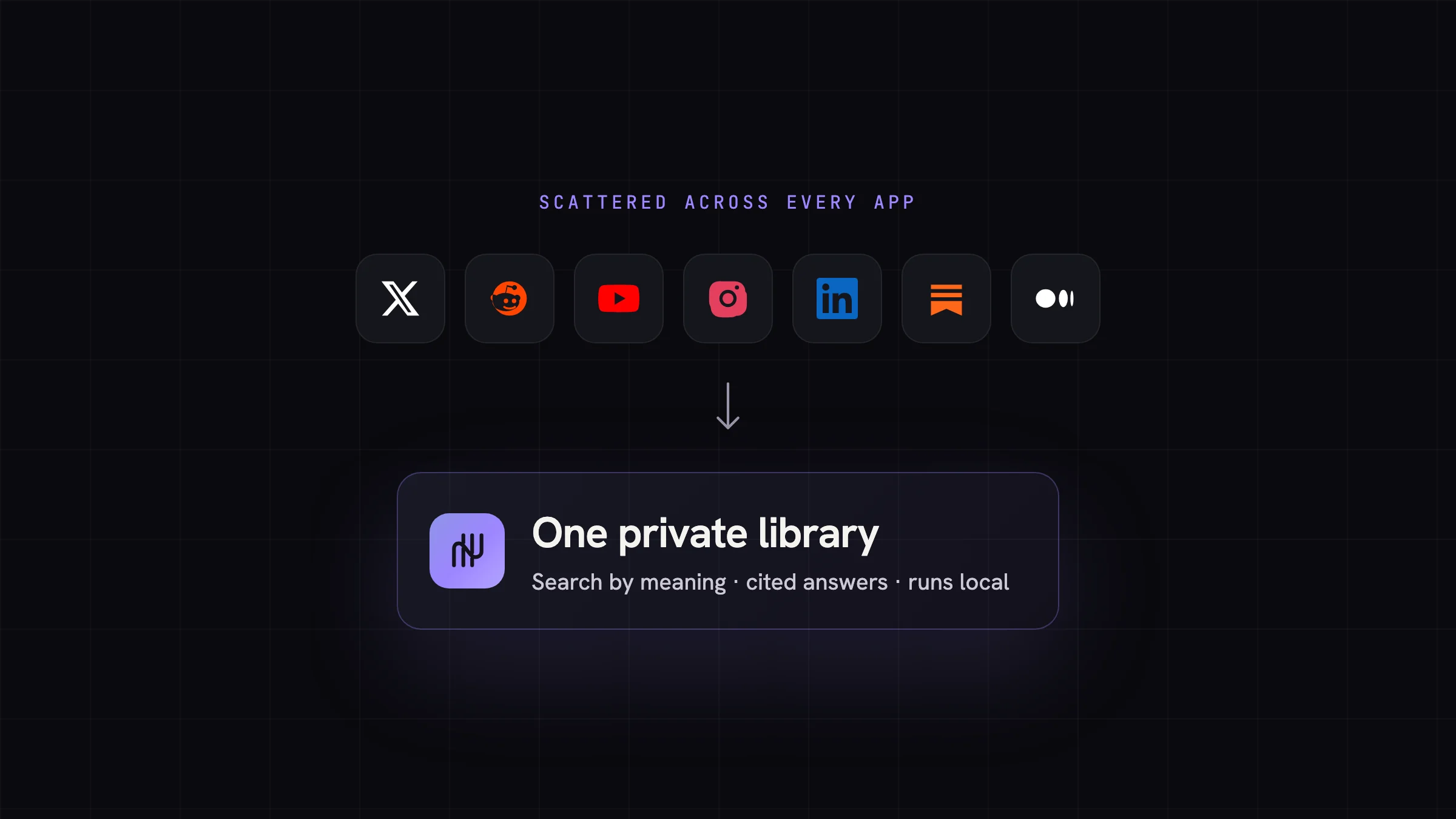
Seven platforms, and any page
Reddit, Instagram, X, YouTube, LinkedIn, Substack and Medium, plus any URL you paste or any page you are on. Your saves stop being seven piles you cannot search.
A browser extension reads what each platform already showed you. It cannot post, delete, follow or message, and that is enforced rather than promised.
Ask library
Questions, answered from your own saves
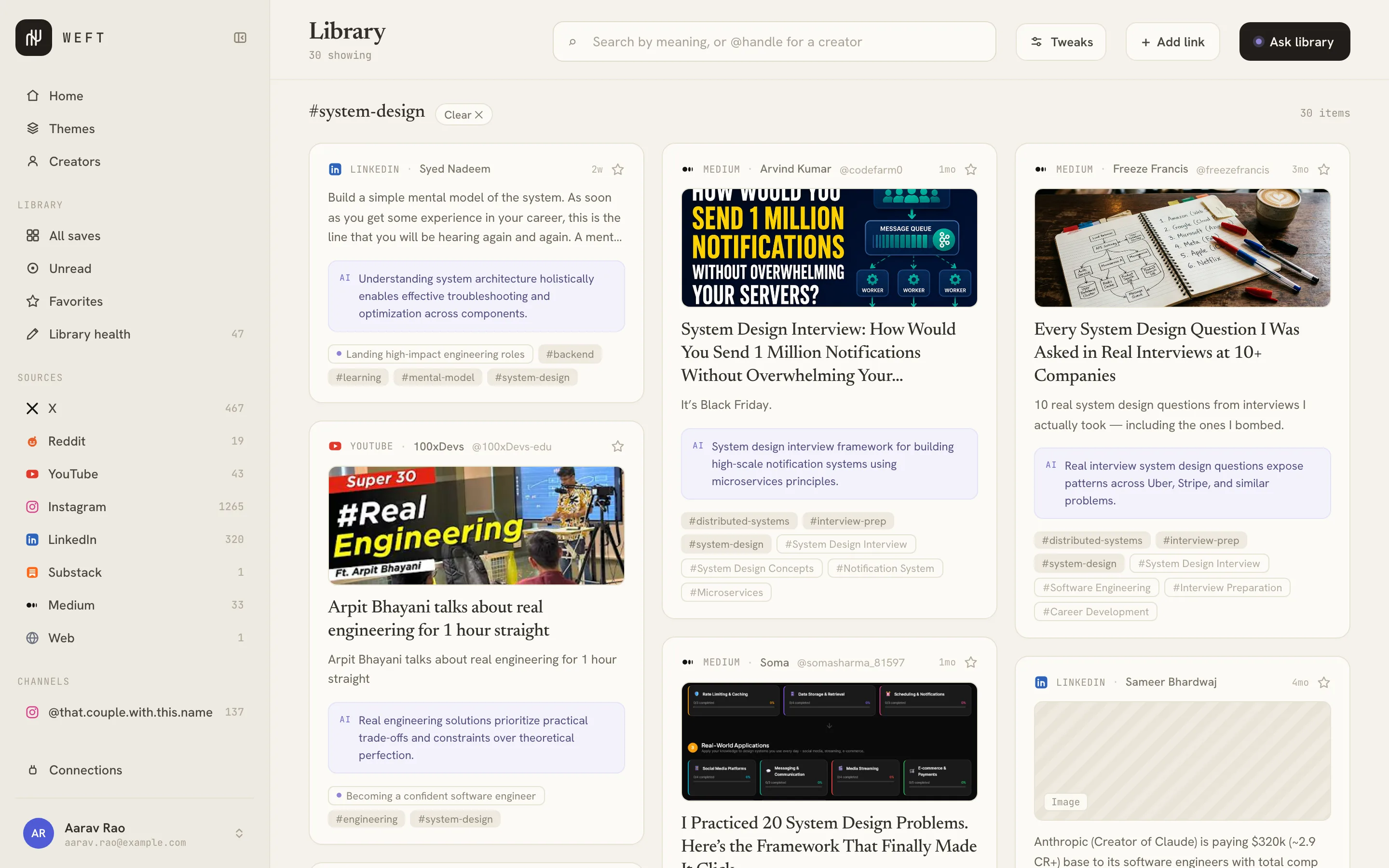
Ask in plain language and get an answer built only from what you saved, with every claim linked to the post it came from.
It shows its working as it goes: what it searched for, how many saves came back, and whether that was enough. It can only cite things it actually found, so it cannot invent a source, and counting questions are answered exactly.
In context
Act on one save through all the others
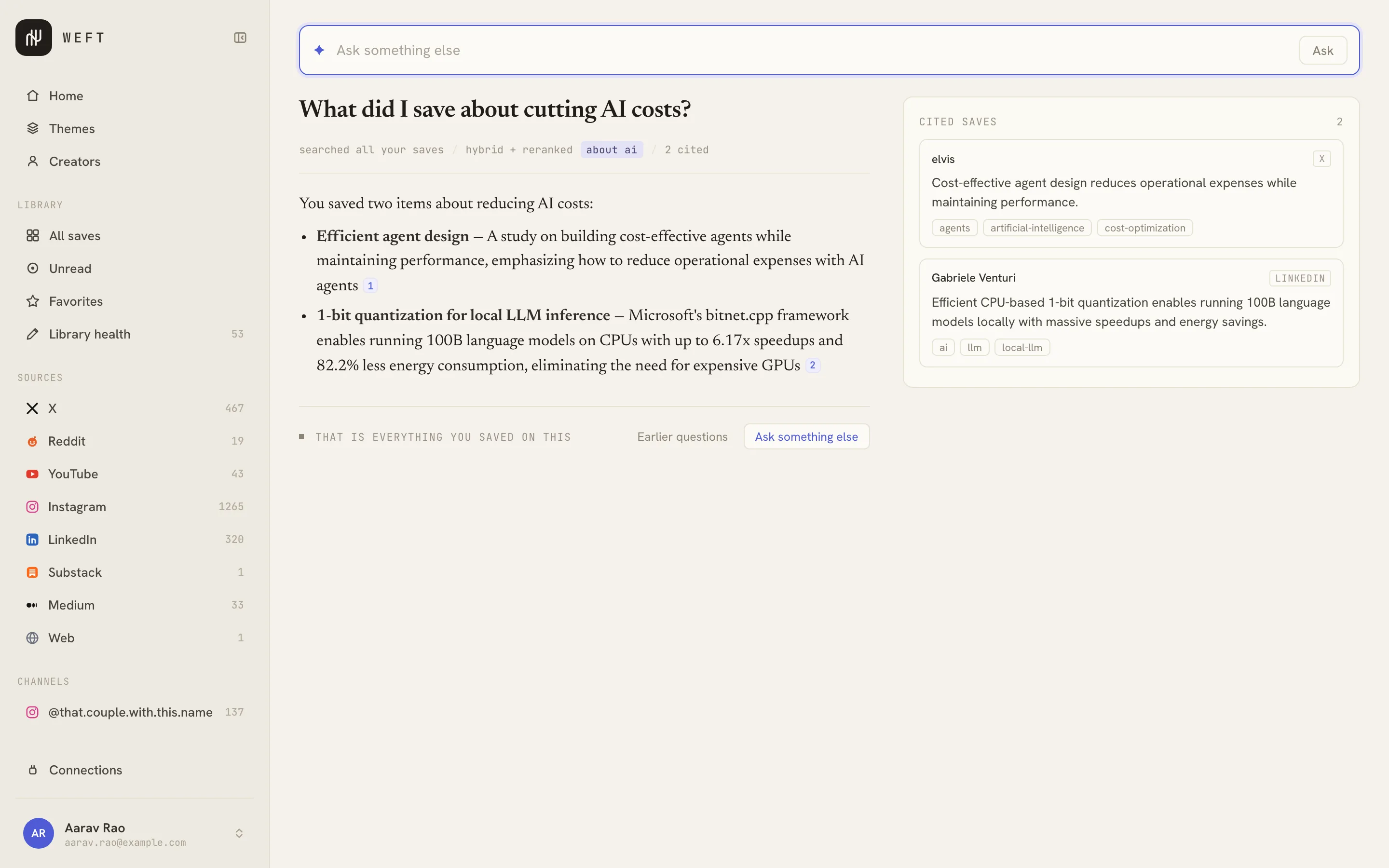
Open any save and ask where it fits, what in your library disagrees with it, what you have saved since, or turn it into a draft grounded in the whole cluster.
If nothing in your library genuinely disagrees, it says so rather than manufacturing a conflict.
Themes
Groups you did not have to make
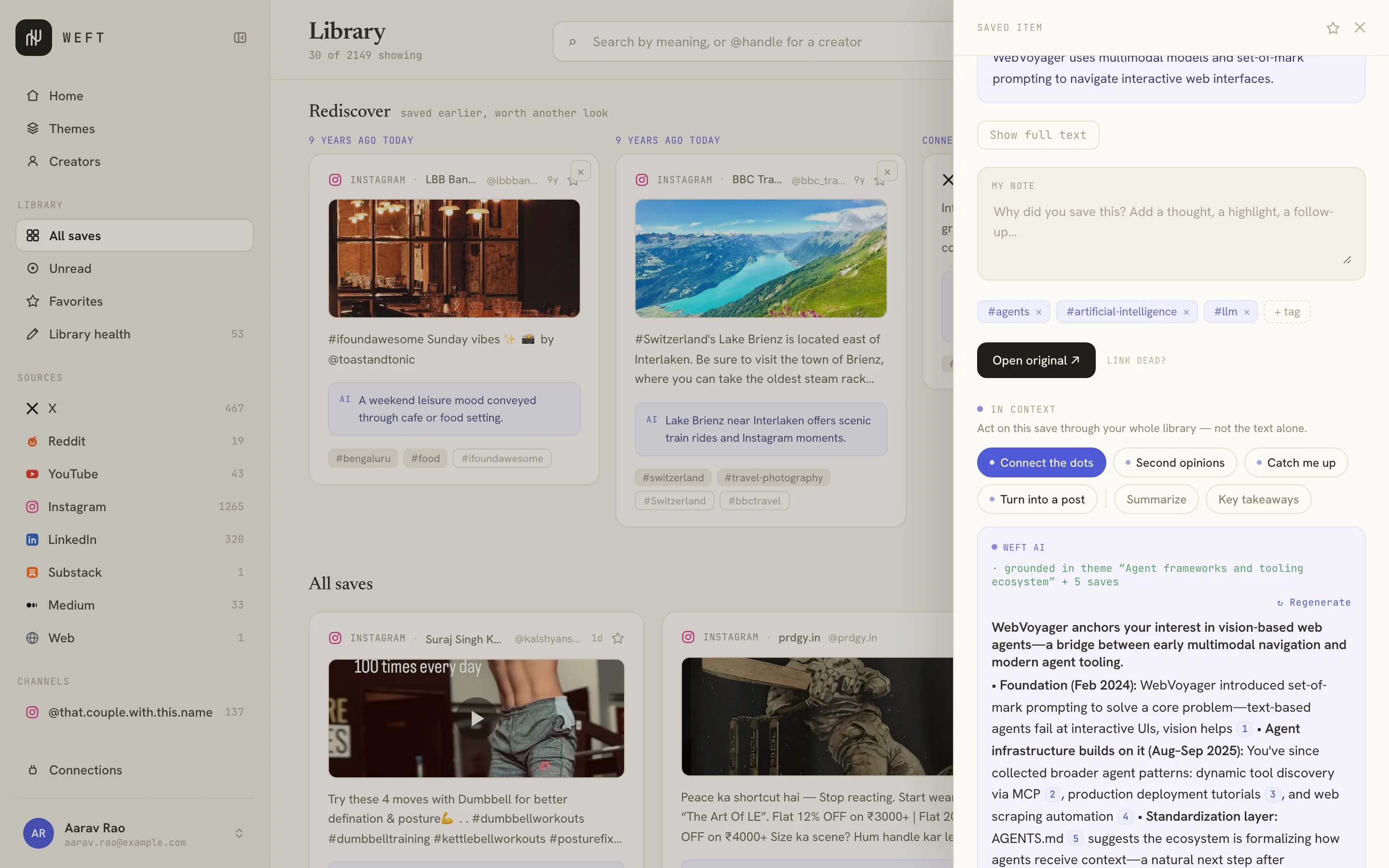
Weft finds what your saves have in common across platforms and names it. No folders to maintain, and nothing to file.
A theme keeps its name as it grows, so it does not get renamed under you every time something is added.
Search
Search by what you meant
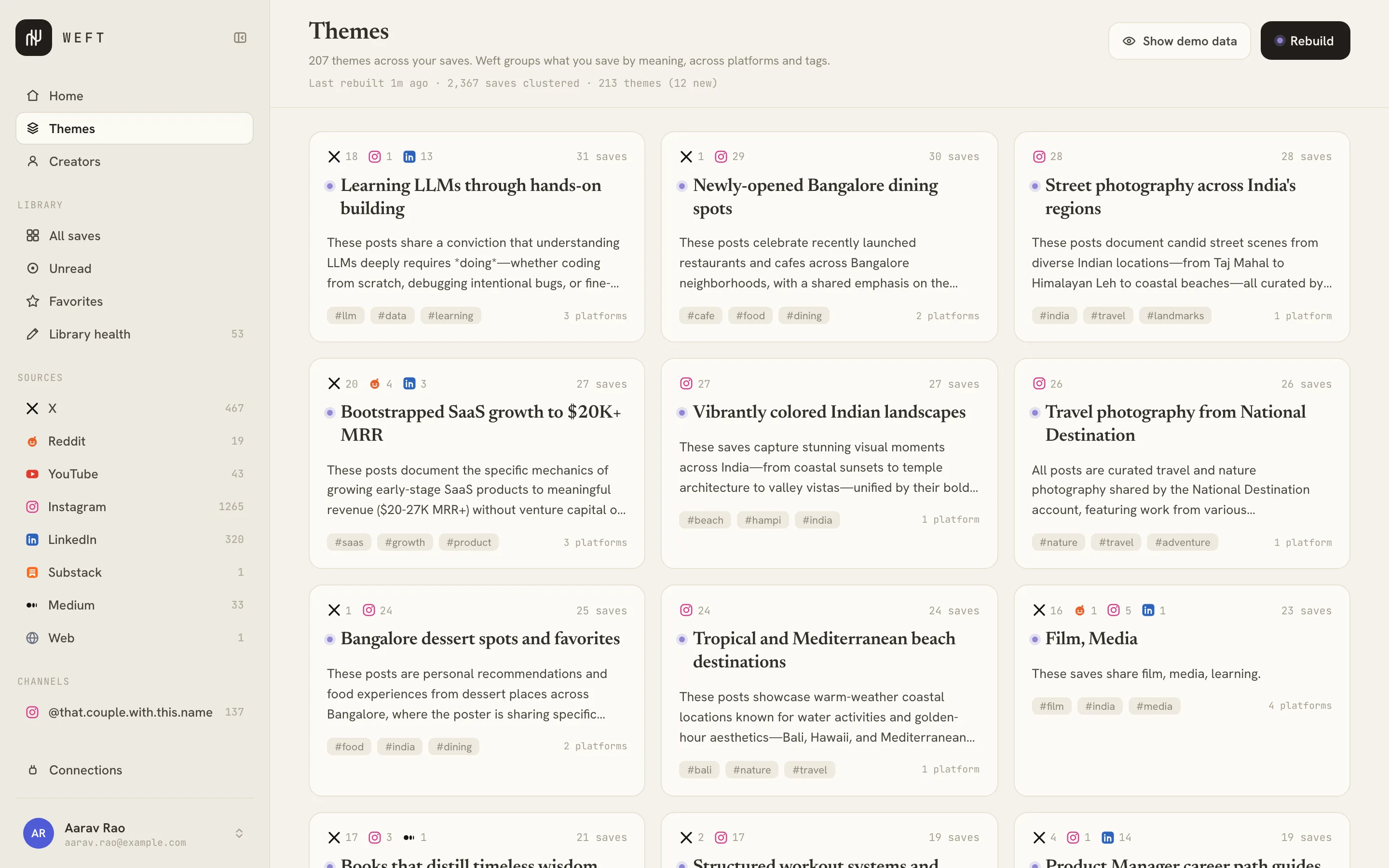
Meaning, exact words, near-miss spelling and your own tags are all searched at once, so a half-remembered phrase still finds the post.
"Instagram places near Bangalore I saved last year" narrows by platform, topic and date, and shows you what it narrowed so you can undo it.
Rediscover
The things you saved and forgot
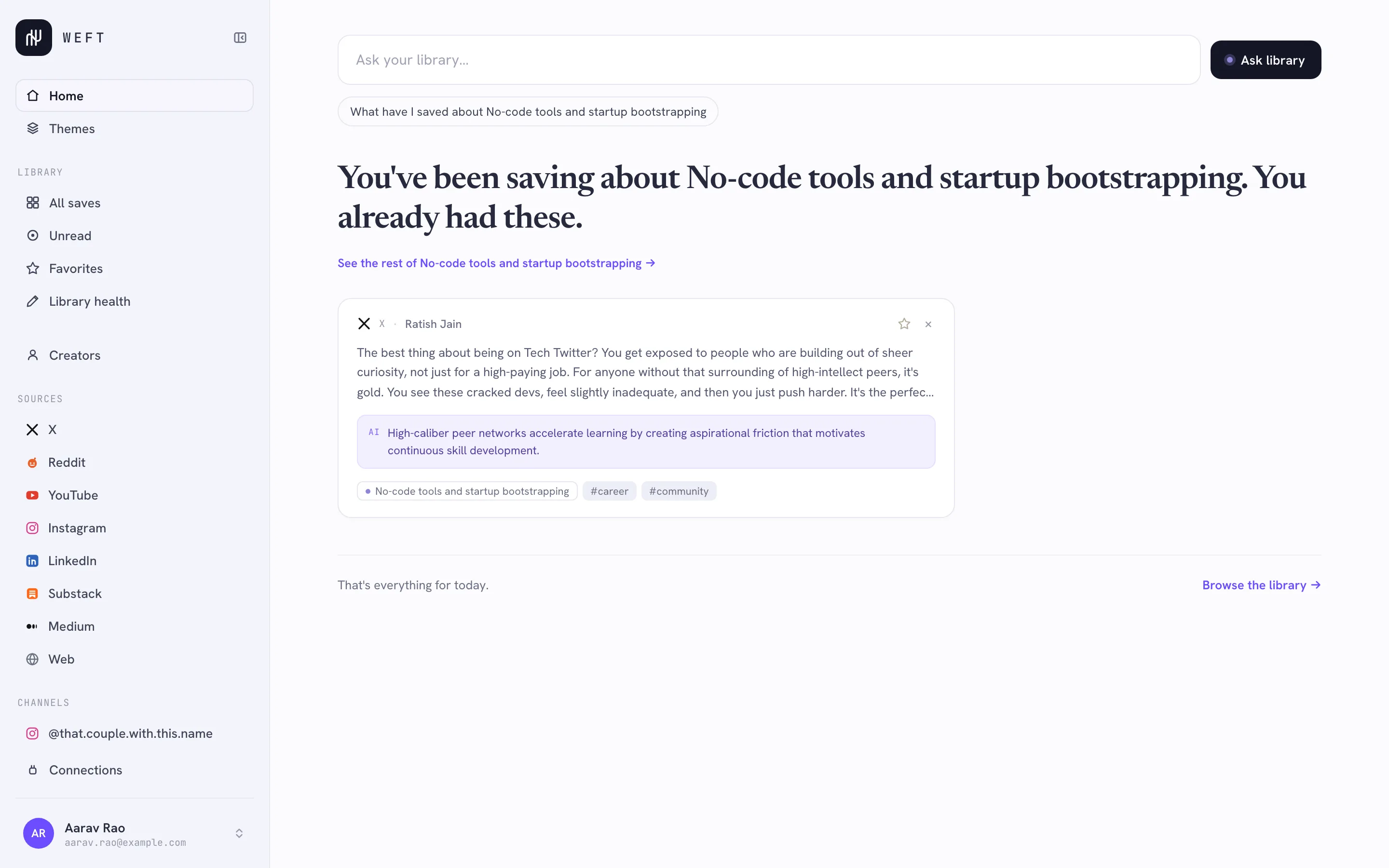
Once a day on Home, a few old saves that connect to what you have been saving lately, or that you marked to come back to. Unread-and-old is not a reason, and a broken thumbnail never makes the cover.
It has a bottom. Dismiss something and it does not come back.
Runs on your machine
The library, the search and the answering model all run locally. No account, no API key, and nothing sent anywhere by default.
Your own key, if you want one
Point the answering at Claude, GPT or Gemini and leave everything else local. Keys are encrypted on your machine and calls go straight to that provider.
Use it from Claude
An optional connector puts your library inside Claude Code and Claude Desktop, so you can ask your own saves without leaving what you are working in.
Saved media repairs itself
Platform image and video links expire within days. Weft notices before you do and quietly re-fetches them, so an old save still plays.
Your notes and summaries
Write a note on any save or replace its summary with your own. Notes feed search, and nothing you write is ever overwritten.
Everyone you save from
A directory of every account behind your saves, counted per platform, with a name filter and a platform facet. Click one to filter the library to them, or type @handle in the search box. The same person appears once per platform, because a handle only names an account on the platform it came from.
Your whole tag vocabulary
Every tag Weft applied, with a library-wide count and the platforms it spans, plus a panel that proposes near-duplicate tags to combine and undoes any merge. Tags used once wait behind a button under the grid, while search always reads the whole vocabulary, because returning nothing for a tag that exists is worse than the noise.
Leaving takes one keystroke
⇧⌘E writes your whole library out as an Obsidian vault, plus the raw records. No proprietary format, and no export queue to wait on.
One app, nothing to assemble
Weft for Mac bundles its own database and search model, so there is nothing to set up and nothing downloads in the background.
That is the short version. The fastest way to check any of it is the live demo, which is this app running on a sample library in your browser.